


Manufacturing confidence remains one of the clearest indicators of economic momentum, but procurement professionals know that strong demand rarely tells the whole story. Ireland's manufacturing sector continued to expand in June, with the AIB Ireland Manufacturing Purchasing Managers' Index (PMI) easing slightly to 54.9 from May's four-year high of 55.9. While output, new orders and employment remained robust, the survey also highlighted rising input costs, supply chain disruption and persistent geopolitical uncertainty.
For procurement leaders, the headline figure should not encourage complacency. Instead, it reinforces the need for procurement management strategies that balance commercial growth with resilience. Manufacturers may be enjoying buoyant order books, but the same survey attributes higher raw material and transport costs to ongoing instability in the Middle East, demonstrating how quickly external events can reshape purchasing conditions.
This is where strategic sourcing becomes increasingly valuable. Rather than relying on a narrow supplier base or focusing solely on the lowest purchase price, organisations should strengthen supplier management by diversifying supply networks, assessing supplier risk and building stronger long-term partnerships. These practices not only improve business continuity but also deliver greater operational efficiency when market conditions become volatile.
The findings are equally relevant to public procurement. Government buyers face many of the same market pressures as private industry, particularly when sourcing construction materials, technology, medical equipment and essential goods. As Ireland prepares to implement its first National Public Procurement Strategy, procurement professionals have an opportunity to place resilience alongside value for money as a core objective of Irish procurement. Buying at the lowest upfront cost remains important, but increasingly, value must also reflect supply security, quality, sustainability and long-term performance.
Digital capability will also play a defining role. Organisations investing in digital procurement platforms are better positioned to monitor supplier performance, identify emerging risks and make faster sourcing decisions using real-time market data. The continued digital transformation in procurement enables procurement teams to move beyond reactive purchasing towards proactive planning, helping organisations anticipate disruption rather than simply respond to it.
The PMI survey also illustrates why sustainable procurement and ethical procurement should remain strategic priorities rather than optional considerations. Supply chain resilience increasingly depends on transparency, responsible sourcing and suppliers that can demonstrate strong environmental and governance standards. These factors are becoming integral to procurement decisions as organisations seek to reduce risk while meeting wider sustainability commitments.
At the same time, procurement cannot operate in isolation from wider business strategy. Effective contract management ensures that agreements remain flexible enough to respond to changing market conditions, while procurement innovation encourages new approaches such as predictive analytics, supplier collaboration and scenario planning. These innovative procurement strategies allow organisations to maintain competitiveness even as costs fluctuate and supply conditions evolve.
Ireland's manufacturers remain optimistic, with more than four in ten firms expecting output to increase over the coming year despite ongoing uncertainty. That optimism is encouraging, but procurement leaders should treat it as an opportunity to strengthen resilience rather than assume stability. Strong demand today does not eliminate tomorrow's supply risks, particularly in an interconnected global supply chain sector where geopolitical events continue to influence prices and availability.
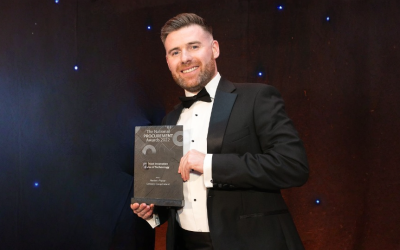
Ultimately, the latest PMI should be viewed as more than an economic indicator. It is a reminder that procurement transformation is becoming essential to maintaining competitiveness. Organisations that combine resilient sourcing, strong supplier relationships and digital capability will be better placed to achieve procurement excellence regardless of market conditions. Those qualities are also increasingly recognised by initiatives such as the National Procurement Awards, where procurement leadership and supply chain excellence are measured not only by savings achieved but by the ability to deliver sustainable value in an uncertain world.
(The views expressed by the writer are his/her own and do not necessarily reflect the views or positions of BusinessRiver.)










.png)

