

KBR, the Houston-headquartered science, technology and engineering firm, has secured a $350 million (€298m) Technical Support Services Contract (TSSC) with the U.S. Geological Survey (USGS) to modernise operations at the Earth Resources Observation and Science (EROS) Center in Sioux Falls, South Dakota.
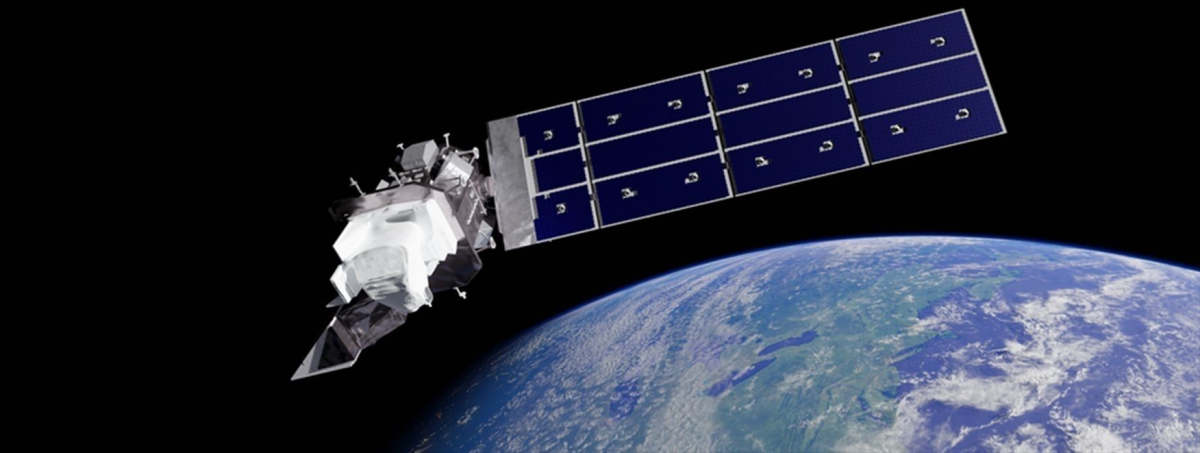
The award positions KBR at the forefront of the upcoming Landsat Next satellite programme, a three-satellite constellation scheduled for launch in 2030.
Under the single Indefinite Delivery/Indefinite Quantity (IDIQ) contract, KBR will deploy cloud-native architectures, artificial intelligence and machine learning (AI/ML), enterprise-scale IT systems, advanced software engineering, and algorithm development.
The contract includes the long-term preservation of global Earth-observation records and the delivery of actionable data analytics to improve natural resource management, disaster response, and environmental monitoring. Work will be executed at Sioux Falls and multiple sites across the U.S. over five years.
“The continuation of this contract is a step forward in how technology can help promote humanity's understanding and stewardship of the Earth,” said Mark Kavanaugh, KBR’s President, Defense, Intel and Space. “By integrating AI, cloud-native systems and next-generation engineering, we’re helping enable USGS to deliver faster, smarter and more resilient solutions to address natural resource management and disaster response.”
Landsat Next will feature enhanced sensors capable of higher spatial resolution, global coverage every six days, and imaging across 26 spectral bands – more than double current Landsat satellites.
The improved capabilities will support monitoring of land use, water quality, agriculture, and wildland fires, supplying governments, industry and communities with vital intelligence.
Discover how this contract advances next-generation Earth observation and strengthens global environmental monitoring in the full story.
Photo credits to NASA’s official website/Ross K. Walter











.png)

