

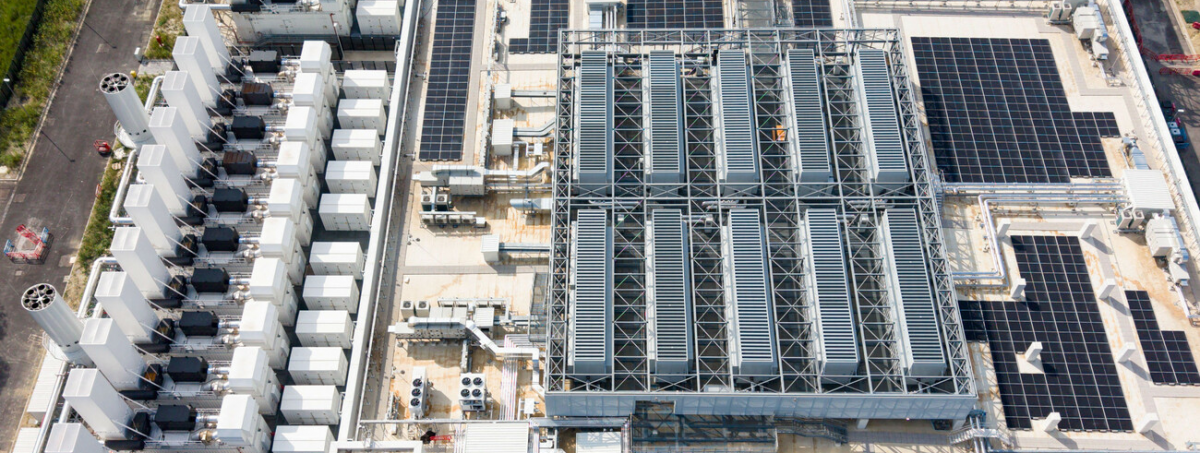
Public procurement spent decades awarding contracts to the lowest price because price was the number that could be verified, defended at audit and compared easily. Over time, however, the discipline recognised that the cheapest tender could become the most expensive asset. Whole-life costing emerged because price alone could not show whether a decision would deliver long-term value. Dr Paul Davis makes a similar argument in The Journal, suggesting that Ireland's data centre debate should look beyond individual consumption figures towards the wider value and impact of these complex assets. For sustainable procurement Ireland, this presents an opportunity to apply an established procurement principle to a rapidly growing sector.
Water and energy consumption remain important measures, but they represent only part of the picture. A whole-life approach can also examine what happens to resources after they enter a data centre and whether infrastructure is creating wider value. The EU Energy Efficiency Directive includes requirements around waste heat recovery, creating an opportunity for data centre operators and public authorities to consider how surplus heat can be used rather than treated simply as waste.
Ireland already has an example of this approach. The Tallaght district heating scheme uses waste heat from an Amazon data centre to heat South Dublin County Hall and the TU Dublin campus. According to Davis, the project cuts close to 1,500 tonnes of CO2 annually. It demonstrates how infrastructure that is often viewed primarily through its resource consumption can also contribute to wider sustainability outcomes when procurement, planning and infrastructure decisions are considered together.
The regulatory environment is also moving towards more outcome-focused requirements. The Commission for Regulation of Utilities' Large Energy Users Connection Policy introduced new requirements for large energy users, including renewable energy and generation or storage obligations for qualifying data centre developments. These measures demonstrate how infrastructure decisions can increasingly consider the conditions needed to support the wider electricity system, rather than assessing demand in isolation.
This same principle can strengthen procurement decisions around digital infrastructure. As Ireland's electricity system becomes less carbon-intensive, embodied emissions from servers, steel, concrete, cooling equipment and equipment replacement can become increasingly relevant to whole-life assessments. The Uptime Institute's sustainability research highlights the growing importance of equipment lifecycles and resource efficiency in data centre sustainability.
Three procurement opportunities stand out. First, public sector organisations procuring cloud, colocation and digital infrastructure services could request more comprehensive sustainability information, including renewable energy sourcing, waste heat recovery, equipment lifecycles and embodied carbon. This would give buyers a stronger evidence base for assessing long-term value.
Second, the Office of Government Procurement could consider how whole-life costing principles can be applied more specifically to data centre and cloud procurement, helping public bodies compare suppliers on performance over the lifetime of a contract rather than simply upfront cost.
Third, procurement teams can work with organisations such as the Sustainable Energy Authority of Ireland to strengthen their understanding of energy efficiency, renewable energy and resource management when evaluating technology suppliers.
Ireland does not need to choose between scrutiny and innovation. A stronger procurement approach can support both. By moving from isolated consumption figures towards whole-life performance, public buyers can help create clearer expectations for data centre operators while encouraging investment in efficiency, renewable energy, heat recovery and longer equipment lifecycles.
The opportunity is to make data centre procurement more sophisticated, not simply more restrictive. Whole-life costing has already helped procurement professionals make better decisions across infrastructure and services. Applying that same discipline to digital infrastructure could help Ireland capture more value from the data centres that increasingly support its economy.









.png)

