

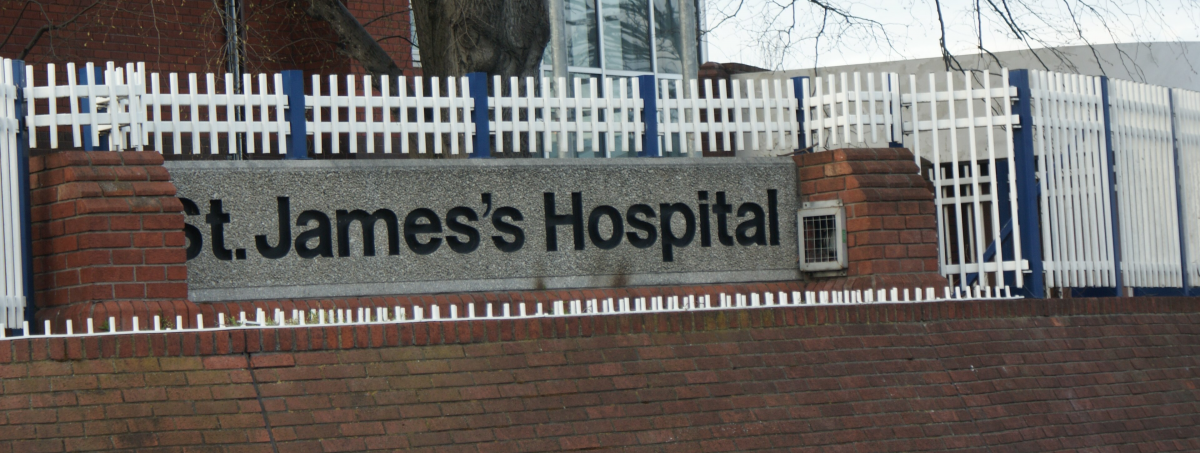
St James’s Hospital is seeking quotations from qualified IT providers for a technology solution to help frontline staff communicate with patients who have limited or no English, according to BreakingNews.ie.
The Dublin hospital recorded 9,382 interpretation assignments in 2025, highlighting the operational demand for accessible communication across a major acute healthcare setting. The procurement aims to give staff rapid access to translation support, particularly when urgent communication is needed or appointments require short, straightforward exchanges. The procurement notice published on 8 July 2026 confirms the requirement for an automated interpretation solution.
St James’s is Ireland’s largest acute general hospital, operating from a 60-acre campus south of the River Liffey. It has approximately 1,030 inpatient beds and 5,652 staff, with services spanning emergency care, outpatient appointments, day cases and inpatient treatment. The scale of its operations makes effective communication an important part of delivering consistent patient services.
According to the procurement documents cited by BreakingNews.ie, the vast majority of interpretation assignments in 2025 required an interpreter to attend in person, with most completed in less than an hour. Ukrainian was the most frequently requested language, accounting for 1,852 assignments, followed by Russian at 1,564, Romanian at 1,456 and Portuguese at 1,033. These figures illustrate the range of language needs that healthcare teams must accommodate in routine and urgent interactions.
For technology suppliers, the procurement presents a defined opportunity to demonstrate how digital interpretation can support frontline services. The hospital identified user-friendliness, translation quality in a medical context and GDPR compliance as essential requirements. Any solution must therefore balance speed and accessibility with the accuracy, privacy and reliability expected in a clinical environment.
The development also reflects a wider opportunity for healthcare organisations to apply technology to practical service-delivery challenges. Digital interpretation tools could help staff obtain language support during short appointments and initial medical-history questions, while offering an additional option when an in-person interpreter is not immediately available. Their value will depend on clinical suitability and the ability to handle sensitive information responsibly.
For the sector, the lesson is direct: public procurement can turn a clearly defined operational need into an opportunity for targeted healthcare innovation. As hospitals seek more responsive ways to support diverse patient populations, technology providers that can combine accessible design, medical translation quality and strong data protection will be better positioned to meet the demands of modern healthcare services.
Source: BreakingNews.ie / Stotles / St James’s Hospital










.png)

