

Ireland’s dependence on imported flour gives Slaney Flour’s new County Wexford mill significance beyond the bakery sector. By bringing large-scale milling capacity back into domestic production, the investment creates a new route to market for Irish grain and gives food manufacturers greater scope to diversify sourcing.
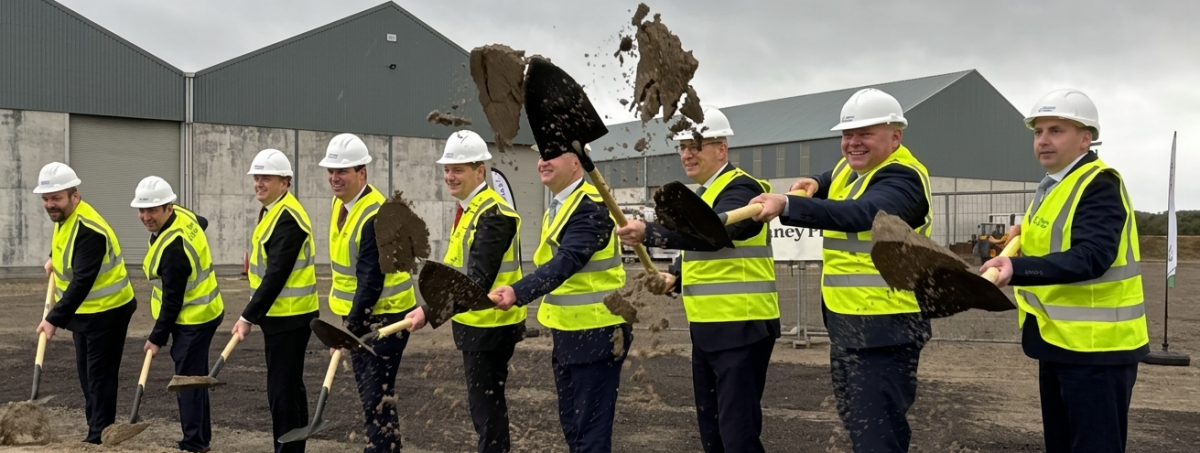
The joint venture between Hemelter Ireland and Ballycarney Grain broke ground at Ballycarney on 8 October 2026. The planned facility will process around 100,000 tonnes of grain annually and produce approximately 80,000 tonnes of flour, with storage capacity for about 24,000 tonnes of wheat. As Agriland reports, Ireland imports around 260,000 tonnes of flour each year, principally from the UK, Germany and France. The new mill will not replace those imports, but its planned output represents a substantial addition to domestic production.
The commercial opportunity begins with procurement. Irish bakeries and food manufacturers will have another potential source of flour, while local grain growers could gain access to a domestic processor with significant annual capacity. For buyers, the development creates an opportunity to reassess sourcing around availability, specifications, price and supplier diversification. For farmers, it could strengthen demand for Irish-grown wheat, provided local grain meets the mill’s production requirements.
The partnership combines international milling expertise with an established regional grain network. Hemelter has supplied the Irish bakery industry for more than 20 years, while Ballycarney Grain, operated by farming brothers Andrew and Raymond Kavanagh, sources, dries and stores grain from around 150 farmers across the south-east. According to Enterprise Ireland, the project is intended to strengthen the bakery supply chain and create new opportunities for the tillage sector. The partners have trialled Irish-grown wheat, although the mill will also source grain internationally to meet production requirements and maintain supply flexibility.
The investment also aligns with the Government’s wider effort to strengthen domestic food processing. Its initiative to support new flour mills recognises the importance of efficient processing infrastructure, a competitive bakery sector and new value-added markets for Irish grain. Slaney Flour turns that policy ambition into a tangible industrial development, connecting agricultural production with demand from food manufacturers.
For the sector, the lesson is direct: domestic processing capacity can turn local sourcing into a more practical procurement option, connecting Irish grain growers with food manufacturers while broadening the country’s flour supply base.
Source: Agriland / Enterprise Ireland










.png)

