

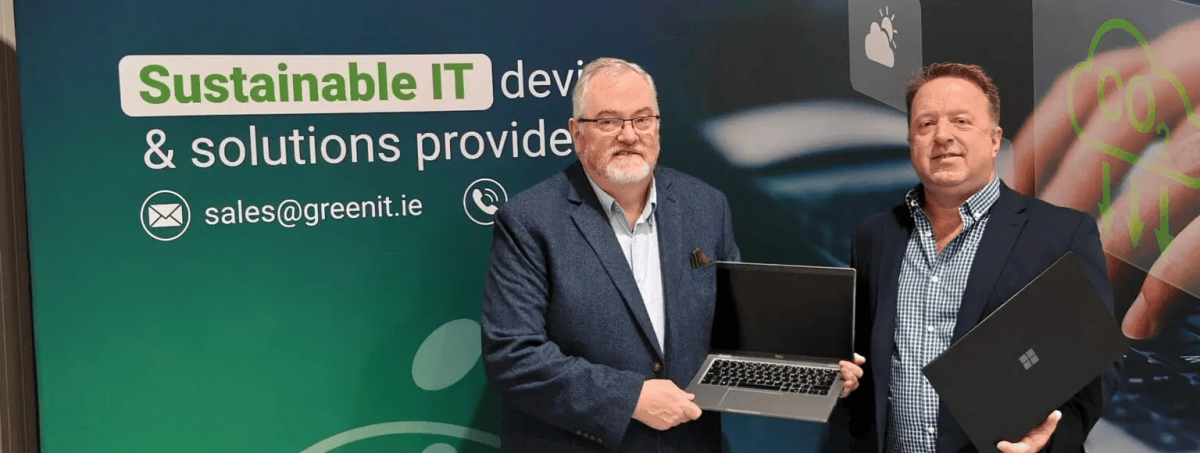
Ireland’s public procurement sector has a growing opportunity to turn sustainability commitments into practical purchasing decisions, with a new technology refurbishment and remanufacturing hub in Naas set to expand the supply of second-life ICT equipment. Irish-owned Green IT plans to open the 22,000 sq ft facility on 18 November, strengthening its capacity to return computers and other devices to productive use.
As reported by Irish Tech News, the company aims to build on its record of returning more than 500,000 ICT devices to circulation. Specialist teams will assess, repair, rebuild and test equipment, offering organisations an alternative to replacing suitable technology with newly manufactured products.
The development has particular significance for public procurement. Green IT, working with UK remanufacturing partner Circular Computing, secured the Office of Government Procurement’s Remanufactured Notebook Framework, which has an estimated value of up to €30 million over four years and could provide around 60,000 remanufactured laptops. The framework is already established, so the new facility represents an expansion of domestic capacity rather than the launch of a new government purchasing programme.
For procurement and facilities management teams, the model offers a practical way to consider whole-life value alongside upfront cost. The framework requires remanufactured notebooks to meet rigorous quality standards and offers warranties of up to five years. Government information states that these devices cost, on average, around 30% less than newly manufactured equivalents, creating potential savings without abandoning performance and reliability requirements.
The environmental case is also substantial. According to the European Commission’s green public procurement case study, choosing a remanufactured laptop can avoid approximately 316kg of carbon emissions, save 190,000 litres of water and preserve 1,200kg of mined resources compared with producing a new equivalent. At the framework’s projected volume, the estimated cumulative benefits are considerable, although actual savings depend on purchasing volumes.
The opportunity extends beyond central government. Schools, healthcare organisations and other eligible public bodies can use the framework, while businesses can assess remanufactured equipment against their own security, support and lifecycle requirements. Clear specifications, secure data erasure, appropriate warranties and supplier quality assurance remain essential to successful adoption.
For the sector, the lesson is direct: sustainable procurement becomes more powerful when credible supply, quality standards and commercial value align. By expanding Ireland’s remanufacturing capacity, Green IT is helping make circular ICT purchasing a more practical option for organisations seeking to control costs, reduce waste and get more value from technology.
Source: Irish Tech News / Office of Government Procurement / European Commission










.png)

