

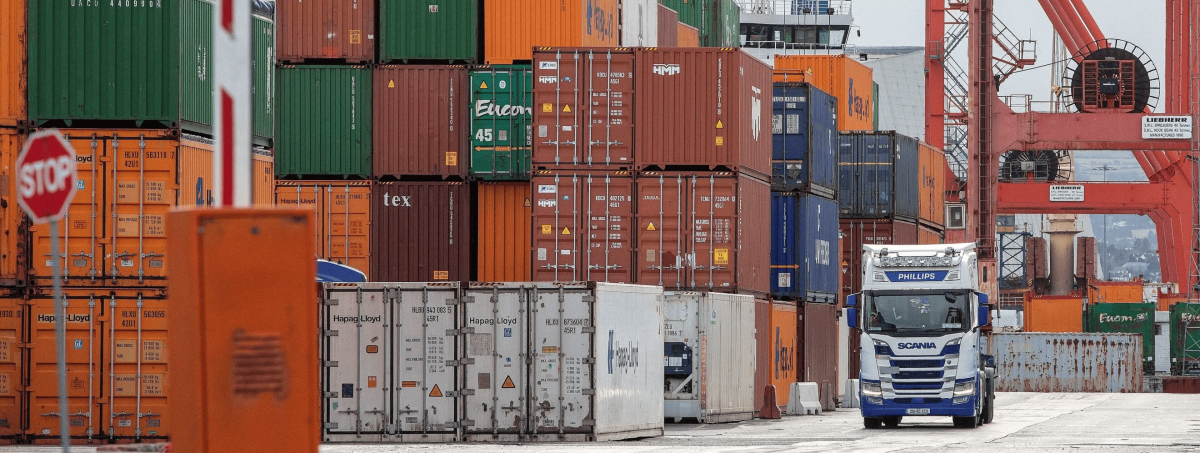
The Irish presidency proposal would move the Industrial Accelerator Act towards product-specific procurement treatment based on reciprocal market access.
The Irish presidency of the Council of the European Union is seeking to reshape the proposed Industrial Accelerator Act, with new rules that could influence how public buyers assess products from outside the bloc.
The proposal introduces a concept of “partner origin”, under which products from third countries could receive treatment equivalent to European products in public procurement and support schemes where the relevant trade and procurement commitments provide for it.
The approach would move away from treating the existence of a free-trade agreement as sufficient in itself. Instead, eligibility would depend on whether a particular product is covered by the EU’s actual procurement commitments with that country. The reported Council compromise therefore places reciprocity and product-level market access closer to the centre of the proposed procurement framework.
The Irish presidency is overseeing negotiations on the legislation during Ireland’s six-month term, which runs until the end of 2026. The Irish presidency has identified the Industrial Accelerator Act as a priority, linking the file to wider objectives around European competitiveness, resilience and economic security.
For procurement teams, the significance lies in the potential move towards a more defined framework for determining supplier eligibility. Rather than applying a broad “Made in Europe” preference, the proposed approach would require procurement authorities to consider the specific products and markets covered by reciprocal commitments. This could provide greater clarity for buyers and international suppliers as the rules develop.
The wider Industrial Accelerator Act proposal is intended to increase demand for low-carbon and European-made products through public procurement and public support schemes. The European Commission has identified strategic sectors including steel, cement, aluminium, automotive and net-zero technologies, where public demand could help strengthen European manufacturing capacity.
That procurement dimension gives the legislation significance beyond trade policy. Public contracts represent a substantial source of demand for industrial products, meaning the eventual rules could influence supplier strategies, sourcing decisions and market access across major European projects.
The proposal also reflects a wider effort to strengthen European supply chains without closing the market entirely. The European Commission's Clean Industrial Deal links European preference and low-carbon requirements with reducing dependencies on third-country suppliers and building more resilient industrial capacity.
The legislation remains under negotiation, however, and the Council's position is not yet the final EU framework. Member states have already raised concerns about administrative burdens and market fragmentation, while discussions continue over implementation timelines and the scope of the measures.
For the sector, the lesson is positive: procurement policy is increasingly being used as a strategic tool to strengthen industrial capacity, supply-chain resilience and demand for lower-carbon products. For suppliers, the eventual rules will make reciprocal market access and product-level eligibility increasingly important considerations when competing for European public contracts.
Source: POLITICO / European Commission / European Parliament / Council of the European Union











.png)

