

Ireland’s expanding biomethane infrastructure is creating a potential new market for dairy transport suppliers, engineering contractors and renewable-energy developers, as European co-operatives demonstrate how farm waste can help fuel milk collection. The opportunity is increasingly relevant to national procurement strategies, where fleet replacement, infrastructure investment and long-term supplier partnerships can help dairy processors pursue lower-emission operations.
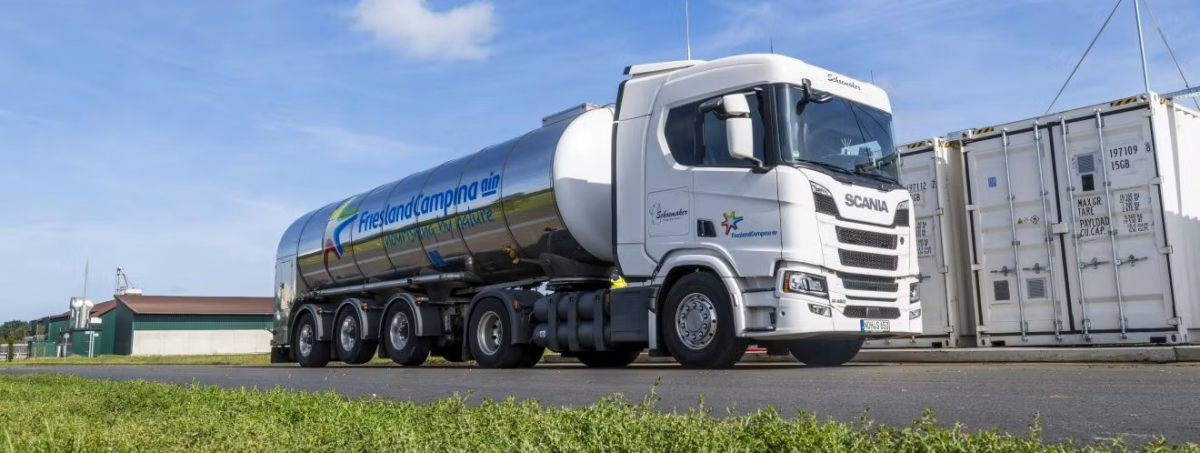
Dutch dairy co-operative FrieslandCampina is working with seven transport companies to transition around half of its milk collection fleet to biomethane-powered trucks over the coming years. The initiative, covering routes across the Netherlands, Belgium and Germany, provides a practical example for Irish processors considering how renewable gas could be incorporated into transport contracts and fleet procurement. As reported by eDairyNews, some of the fuel is produced from manure through anaerobic digestion, linking dairy farming by-products with the logistics operation.
The model is already taking shape at Barver Landmilch in Germany, where a FrieslandCampina member farm produces biomethane using its own manure digester and operates on-site refuelling facilities. This arrangement demonstrates how co-operatives and transport partners can coordinate fuel supply, vehicle deployment and collection routes. For Irish buyers, it highlights the value of assessing vehicle availability, refuelling access, operating requirements and whole-life costs together rather than procuring trucks in isolation.
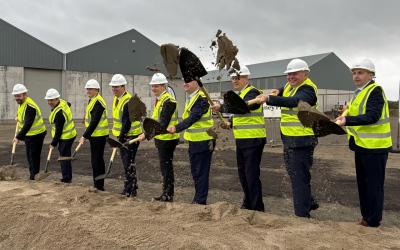
Ireland is also developing infrastructure to support a larger domestic biomethane market. Gas Networks Ireland’s €32 million Mitchelstown Central Grid Injection facility, officially opened on 2 October 2026, can receive biomethane transported from production sites that cannot connect directly to the gas network. At full capacity, it could inject up to 700 GWh annually, equivalent to approximately 12% of Ireland’s 2030 biomethane production target. Separately, the Government’s €200 million Biomethane Capital Grant Scheme has entered an expression-of-interest phase to help shape support for new production projects.
For procurement teams, these developments point to a wider opportunity across the supply chain: renewable-gas producers, anaerobic-digestion equipment suppliers, fleet manufacturers, maintenance providers and infrastructure contractors could all play a role if Irish dairy operators pursue similar models. However, no equivalent fleet conversion commitment from the major Irish dairy co-operatives has been established, so adoption remains a commercial possibility rather than a confirmed purchasing programme.
For the sector, the lesson is direct: Ireland’s biomethane investment gives dairy co-operatives a stronger basis to evaluate circular transport models and plan future procurement around vehicles, fuel infrastructure and renewable-gas supply as a connected system.
Source: eDairyNews / DairyReporter / Gas Networks Ireland










.png)

