

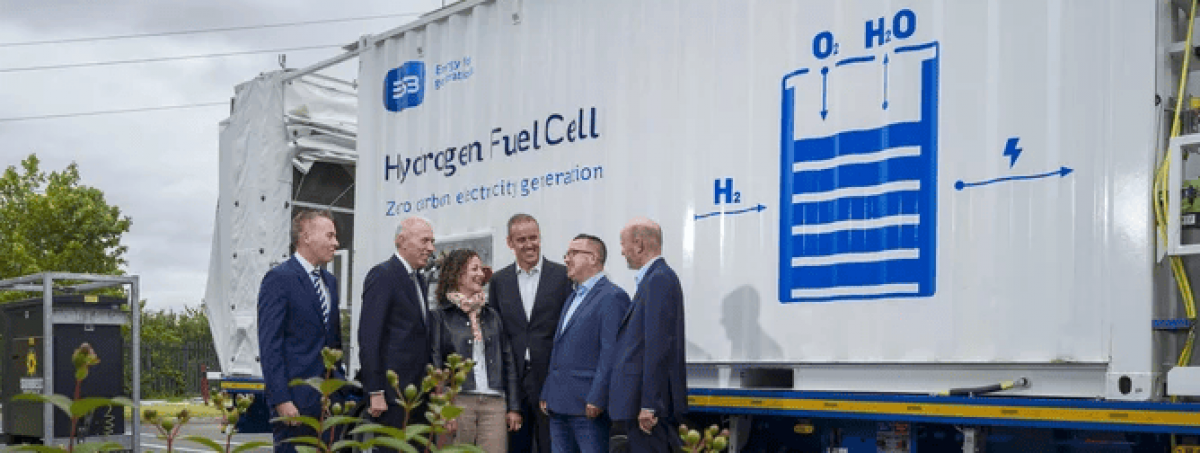
Equinix is testing hydrogen-powered backup technology at its Dublin data centre as part of a pilot project exploring cleaner energy solutions for critical digital infrastructure and future low-carbon procurement.
Data Centre Magazine highlights that the 12-week trial, delivered in partnership with ESB and GeoPura, is taking place at Equinix's DB3 facility in Dublin. The project is designed to evaluate hydrogen fuel cell technology as an alternative to conventional diesel and gas backup generation while helping address ongoing electricity grid constraints in the region.
The pilot uses two hydrogen-powered generators capable of providing up to half a megawatt of continuous power to support cooling infrastructure. Integrated with the site's uninterruptible power supply (UPS) systems, the units can respond dynamically to changing grid conditions while contributing to improved energy efficiency across the facility.
The initiative is examining how hydrogen can strengthen resilience within data centre operations by providing reliable backup power with zero direct onsite emissions, producing only water and heat during operation. The technology also has the potential to reduce reliance on fossil fuel-based generation for critical infrastructure.
Peter Lantry, Managing Director of Equinix Ireland, said the project represents an important step in demonstrating how hydrogen could help address Ireland's energy challenges while supporting the country's wider decarbonisation ambitions. He noted that the trial is intended to prove hydrogen's viability as a practical alternative for live operational environments.
The project also explores how hydrogen systems can operate alongside battery storage and existing UPS infrastructure, allowing operators to improve energy resilience while reducing operational emissions. Equinix, ESB and GeoPura will use the pilot to assess the technology's operational performance, safety and commercial viability for wider deployment.
Beyond backup generation, the trial is evaluating opportunities to improve overall resource efficiency through the potential reuse of waste heat and water generated by the fuel cells. The technology is designed to scale beyond the current deployment, with future applications potentially supporting much larger data centre environments.
The initiative reflects growing investment in innovative energy technologies as organisations seek to strengthen infrastructure resilience while meeting sustainability objectives. For procurement and infrastructure leaders, projects such as this demonstrate how strategic partnerships and emerging clean energy solutions could play an increasingly important role in future sourcing decisions for critical facilities.











.png)

